What should you be paying attention to this week?
It’s getting easier to put up a storefront on your Facebook page, thanks to a partnership between Facebook, e-commerce platform provider Magento, and service provider Zibaba. Say that ten times fast. (Internet Retailer)
Your takeaway: If you’ve been wondering how merchants like LL Bean and Petco got their Facebook stores up and running, it’s going to get easier. If you do a lot of online sales and Facebook is (or you want it to be) a major customer channel, now’s a good time to start thinking about what it would take to do this.
Google, among other things this week, has launched a catalog app for the iPad. Also coming soon for Android, Google Catalog lets users flip through digital catalogs, go shopping, and share with friends. (Time Techland)
Your takeaway: If you've got a catalog, and you sell to a relatively affluent audience (i.e. people with iPads), then this is something you might consider. The more convenient you make shopping for your customers, the better.
Gotorola or Motoroogle? Never one to rest on its laurels, the real big story for Google this week is the acquisition of Motorola Mobility. This is a good news/bad news situation (ZDNet)
What does it mean that Google will now own its very own mobile device manufacturer? Google will be more like Apple – they will supply the software platform and the device hardware, as well as the content and apps they already provide.
But let’s not forget that a huge motivator for Google’s acquisition was to strengthen its position in the patent wars – here’s more on these from NPR, including a handy graphic that explains who’s suing who.
But as ZDNet says, this also means that Google will then compete against the very handset makers using its Android platform – Samsung, HTC, etc. Isn’t this a bit cannibalistic?
Of course, Google could always just shut Motorola down completely and keep the patents, and there’s always a chance they could do that, but I hope not. That’s a lot of jobs we can’t afford to lose.
What do you think the Google acquisition of Motorola means for technology, jobs, telecom? Please share in the comments.
Have a great weekend, and thanks for reading!
How to Find Better Customers
The last couple of years have been hard on retailers. Customers expect sale after sale, more and more discounts, incredible service, and tons of freebies. And loyalty? Forget it. There's always another deal around the corner.
So how do you find better customers?
Reward the behaviors you want, and discourage the ones you don't.
First, examine your best customers.
How profitable are they? What are they buying? Are they on your email list? Do they follow you on Twitter? Are they your fans on Facebook? What's converting them to buy, and buy again?
In the process of this examination, you might find that your best customers are frequent responders to your Facebook promotions. That's great, but how can you use this knowledge?
Second, reward the behaviors you want.
If Facebook is your most profitable channel, then make your promotions even more profitable by crafting deals with the greatest possible margins.
Encourage customers on all channels to join you on Facebook as well. If your Facebook promotions are generating the most profitable customers, the more fans you have, the better.
Third, discourage the behaviors you don't want.
Which customers are the most expensive to serve? How can you redirect them to more profitable channels? If you find, for example, that customers who call your call center are the least profitable, consider adding more ways in which to serve them, perhaps encouraging them to use instant messaging, online resources (your FAQ are comprehensive, right?) or Twitter to ask questions.
Re-examine your shopping cart - is it too difficult to buy online? If you have a two-screen process, can you get it down to one screen? Can you highlight the safety and security of your shopping cart process?
At the same time, make sure your customers still have several options for both sales and service- your stores, call center, web site, and email. You don't want to turn people off unless you're absolutely sure you don't want their business.
What are you doing to reward your best customers? Please share in the comments.
![]() |
| Photo: Flickr user Zizzybaloobah. |
Reward the behaviors you want, and discourage the ones you don't.
First, examine your best customers.
How profitable are they? What are they buying? Are they on your email list? Do they follow you on Twitter? Are they your fans on Facebook? What's converting them to buy, and buy again?
In the process of this examination, you might find that your best customers are frequent responders to your Facebook promotions. That's great, but how can you use this knowledge?
Second, reward the behaviors you want.
If Facebook is your most profitable channel, then make your promotions even more profitable by crafting deals with the greatest possible margins.
Encourage customers on all channels to join you on Facebook as well. If your Facebook promotions are generating the most profitable customers, the more fans you have, the better.
Third, discourage the behaviors you don't want.
Which customers are the most expensive to serve? How can you redirect them to more profitable channels? If you find, for example, that customers who call your call center are the least profitable, consider adding more ways in which to serve them, perhaps encouraging them to use instant messaging, online resources (your FAQ are comprehensive, right?) or Twitter to ask questions.
Re-examine your shopping cart - is it too difficult to buy online? If you have a two-screen process, can you get it down to one screen? Can you highlight the safety and security of your shopping cart process?
At the same time, make sure your customers still have several options for both sales and service- your stores, call center, web site, and email. You don't want to turn people off unless you're absolutely sure you don't want their business.
What are you doing to reward your best customers? Please share in the comments.
Marketing News Roundup - August 12, 2011
What should you be paying attention to this week?
Besides continued uncertainty?
Groupon gets mixed reviews from merchants. 82% of merchants surveyed unhappy with their Groupon experience, but 45% willing to try again. (eMarketer)
Your takeaway: The verdict is still out on these kinds of deal sites. I’ve said this before and I’ll say it again. First, really price this out – you’re going to need to discount your product between 50% and 90% to work with Groupon and similar sites. Do your math ahead of time! Second, customers are loyal to Groupon, not your business, so the number of new, loyal customers you get may not be as high as you think it’s going to be. If you’re OK with both of those things, give it a try, but keep your eye on the news – more and more stories are surfacing that Groupon itself may be financially insolvent.
E-Commerce spending up 14%. $1 of every $10 in discretionary spending now happens online. (Washington Post)
Your takeaway: Take a few moments in the next week to sit down with your web analytics software and examine your shopping cart funnel. Could you lower your abandon rate with an easier sales process, a more noticeable callout about data security and privacy, or a reminder email strategy?
Also, don’t forget that this still means that $9 of discretionary spending happens offline. If you sell your product through both online and offline channels, make sure these work together to capture customers, however they like to buy.
People are starting to experience social network fatigue. Rather than connecting to friends and family, people simply feel pressured to check and update their networks without getting a lot of value out of them. (New York Times)
Your takeaway: Focus on the social networks where your customers are. Don’t waste time trying to sell your homemade scented soap on LinkedIn or your extremely technical e-commerce solution on Facebook. Use management tools to pre-schedule posts to multiple networks, but make sure you do a bit of customization – I can usually tell when something written for Twitter winds up on Facebook (complete with #hashtags) and this is a heads up to customers that you’re taking some shortcuts.
What's going on with you this week? Tell me in the comments.
Have a wonderful weekend, and thanks for reading!
Besides continued uncertainty?
Groupon gets mixed reviews from merchants. 82% of merchants surveyed unhappy with their Groupon experience, but 45% willing to try again. (eMarketer)
![]() |
| The only thing that's certain is more uncertainty. Photo: Flickr user Patrik Jones. |
E-Commerce spending up 14%. $1 of every $10 in discretionary spending now happens online. (Washington Post)
Your takeaway: Take a few moments in the next week to sit down with your web analytics software and examine your shopping cart funnel. Could you lower your abandon rate with an easier sales process, a more noticeable callout about data security and privacy, or a reminder email strategy?
Also, don’t forget that this still means that $9 of discretionary spending happens offline. If you sell your product through both online and offline channels, make sure these work together to capture customers, however they like to buy.
People are starting to experience social network fatigue. Rather than connecting to friends and family, people simply feel pressured to check and update their networks without getting a lot of value out of them. (New York Times)
Your takeaway: Focus on the social networks where your customers are. Don’t waste time trying to sell your homemade scented soap on LinkedIn or your extremely technical e-commerce solution on Facebook. Use management tools to pre-schedule posts to multiple networks, but make sure you do a bit of customization – I can usually tell when something written for Twitter winds up on Facebook (complete with #hashtags) and this is a heads up to customers that you’re taking some shortcuts.
What's going on with you this week? Tell me in the comments.
Have a wonderful weekend, and thanks for reading!
Dealing with Uncertainty
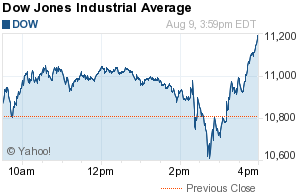
With all of the uncertainty and volatility in markets across the world right now, it's really hard to forecast or predict what's next. Looking at last year's pattern just won't cut it. It's hard to plan a big sale or predict results when constant change is the new norm. So what can you do? Here's a few pointers:
1) Plan for disaster, but keep going. Schedule that grand opening. Have a sale. Send out some e-mails. Write that press release. Update your blog. Do a Facebook promotion. But understand that something as big as the debt ceiling debacle (and the super-fun it's caused) can happen anytime. Just because stuff happens, doesn't mean you stop doing business.
2) Redeploy underutilized assets. That's a fancy way of saying that if you have an eblast that no one read because all of your customers were paying attention to the shenanigans on Capitol Hill, tweak it a bit and send it out again. It'll save you time and design costs, and the message may take the second time around.
3) Be flexible and play out the what-ifs. What if your next sales event is hijacked by world events? Always have a Plan B. The best marketing plan is a flexible one. Be ready to reschedule, retrench, reboot, and restart. Think more carefully than usual when you order inventory and supplies. Don't order anything that can't be sold more than one way or any supplies that can't be repurposed.
4) Keep your head up. If you can get through now (and you got through the last thing), you can get through the next thing. Being resilient is key to survival. You can do it!
How are you getting through this crazy time? Please comment on this post.
Related posts:
Creating Your Marketing Plan
Four Ways to Keep Your Head Up in Tough Times
![]() |
| DJIA Results from August 9, 2011. From Yahoo! Finance. |
2) Redeploy underutilized assets. That's a fancy way of saying that if you have an eblast that no one read because all of your customers were paying attention to the shenanigans on Capitol Hill, tweak it a bit and send it out again. It'll save you time and design costs, and the message may take the second time around.
3) Be flexible and play out the what-ifs. What if your next sales event is hijacked by world events? Always have a Plan B. The best marketing plan is a flexible one. Be ready to reschedule, retrench, reboot, and restart. Think more carefully than usual when you order inventory and supplies. Don't order anything that can't be sold more than one way or any supplies that can't be repurposed.
4) Keep your head up. If you can get through now (and you got through the last thing), you can get through the next thing. Being resilient is key to survival. You can do it!
How are you getting through this crazy time? Please comment on this post.
Related posts:
Creating Your Marketing Plan
Four Ways to Keep Your Head Up in Tough Times
Marketing News Roundup - August 5, 2011
What should you be paying attention to this week?
Google has purchased daily deal aggregator Dealmap. There are now more than 400 providers of daily deals, a sector that may grow to $6.1 billion by 2015. (New York Times)
Your takeaway: Keep an eye on these daily deal sites, but be wary. The bottom line is that you’re almost always going to have to discount your product by at least 50%, and consumers are loyal to the deal site brands (like Groupon or LivingSocial), not your brand. Do your homework before you commit. More information here.
The Washington Post reports that everyone is rebranding, from Honest Tea to non-profits, to the DC Water and Sewer Authority. (WaPo)
Your takeaway: In my experience, changing a visual brand (your logo, color scheme, tagline) is almost never worth the expense and headache, especially if you’re a brick and mortar business (just imagine purchasing new signage for hundreds of stores). But it CAN be worth it if there’s good reason to change. If you need to disassociate your brand story from a PR nightmare, or your visual identity is simply outdated, give some serious thought to what it would take, and what it would cost to rebrand yourself. Just read this story about the Gap’s experience before you jump in.
The most important story this week:
Remember how Obama lowered FICA by 2% as part of his economic stimulus? FICA is shorthand for the social security tax the government takes out of employee paychecks each pay period. In 2011, people collecting a paycheck received a 2% reduction in their FICA withholding, so paychecks got a bit bigger, whether folks received raises or not.
Unfortunately, as part of the recent debt ceiling debacle, this tax cut won’t be held over for 2012. This means that in 2012, the government will begin taking that 2% out again. The result? Workers collecting a paycheck will have more tax withheld starting January 1. People who don’t get a raise will have smaller paychecks, to the tune of $10 billion a month, or about $1,500 per working family for year. (Business Insider)
Your takeaway: That’s $1500 these families can’t spend on your product. What’s your plan to deal with this? You’d better start thinking now - about how to market more meaningfully (and less expensively), and how to stay relevant. Is your product a "want" item? Make it a need. Even if you’re a B-to-B outfit, if your customers sell to consumers, you’re still going to be affected.
What's on your mind this week? Please tell me in the comments.
Have a great weekend, and thanks for reading!

![]() |
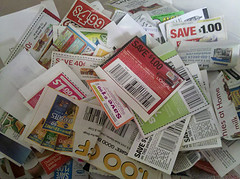
| So many coupons! Photo: Flickr user sdc2027. |
Your takeaway: Keep an eye on these daily deal sites, but be wary. The bottom line is that you’re almost always going to have to discount your product by at least 50%, and consumers are loyal to the deal site brands (like Groupon or LivingSocial), not your brand. Do your homework before you commit. More information here.
The Washington Post reports that everyone is rebranding, from Honest Tea to non-profits, to the DC Water and Sewer Authority. (WaPo)
Your takeaway: In my experience, changing a visual brand (your logo, color scheme, tagline) is almost never worth the expense and headache, especially if you’re a brick and mortar business (just imagine purchasing new signage for hundreds of stores). But it CAN be worth it if there’s good reason to change. If you need to disassociate your brand story from a PR nightmare, or your visual identity is simply outdated, give some serious thought to what it would take, and what it would cost to rebrand yourself. Just read this story about the Gap’s experience before you jump in.
The most important story this week:
Remember how Obama lowered FICA by 2% as part of his economic stimulus? FICA is shorthand for the social security tax the government takes out of employee paychecks each pay period. In 2011, people collecting a paycheck received a 2% reduction in their FICA withholding, so paychecks got a bit bigger, whether folks received raises or not.
Unfortunately, as part of the recent debt ceiling debacle, this tax cut won’t be held over for 2012. This means that in 2012, the government will begin taking that 2% out again. The result? Workers collecting a paycheck will have more tax withheld starting January 1. People who don’t get a raise will have smaller paychecks, to the tune of $10 billion a month, or about $1,500 per working family for year. (Business Insider)
Your takeaway: That’s $1500 these families can’t spend on your product. What’s your plan to deal with this? You’d better start thinking now - about how to market more meaningfully (and less expensively), and how to stay relevant. Is your product a "want" item? Make it a need. Even if you’re a B-to-B outfit, if your customers sell to consumers, you’re still going to be affected.
What's on your mind this week? Please tell me in the comments.
Have a great weekend, and thanks for reading!

Don't Make Fun of Your Customers
A letter from a little girl who decided to run away because her parents were teasing her is taking Facebook by storm. The writers at Cafemom have wisely pointed out that we have to be careful when we make fun of our kids - they are sensitive and things that seem trivial to us can be big deals to them. Maybe it's time to give our kids a bit of a break.
How about you stop making fun of your customers too?
What, you say? I love my customers!
It's time to look in the mirror, and ask some hard questions.
When a customer has trouble using your product, do you assume that they are doing it wrong?
Do you secretly think that some (or most) of your customers are stupid?
Do you secretly (or maybe not so secretly) think that your customers can't take care of themselves in basic ways?
Do you think that people are a bit silly to pay your prices?
When someone has a problem with your email marketing content, do you offer to take them off the list, rather than discuss the issue?
Do you think you don't owe your customers an answer as to why you price the way you do, why your terms and conditions are the way they are, or why they receive so much marketing material?
If your answer to any of these questions is yes, let's re-evaluate your relationship with your customers.
Your customers are your lifeblood. They're the reason you exist. Without them, you'd be broke and your staff would have to find other jobs.
So stop making fun of your customers. Respect them, take good care of them, and respond to their questions graciously, no matter how silly they might seem.
How are you showing your customers some respect these days? Please comment on this post.
![]() |
| Hug a customer today, but only if they want to. Photo: Kevin Dooley, from Flickr |
What, you say? I love my customers!
It's time to look in the mirror, and ask some hard questions.
When a customer has trouble using your product, do you assume that they are doing it wrong?
Do you secretly think that some (or most) of your customers are stupid?
Do you secretly (or maybe not so secretly) think that your customers can't take care of themselves in basic ways?
Do you think that people are a bit silly to pay your prices?
When someone has a problem with your email marketing content, do you offer to take them off the list, rather than discuss the issue?
Do you think you don't owe your customers an answer as to why you price the way you do, why your terms and conditions are the way they are, or why they receive so much marketing material?
If your answer to any of these questions is yes, let's re-evaluate your relationship with your customers.
Your customers are your lifeblood. They're the reason you exist. Without them, you'd be broke and your staff would have to find other jobs.
So stop making fun of your customers. Respect them, take good care of them, and respond to their questions graciously, no matter how silly they might seem.
How are you showing your customers some respect these days? Please comment on this post.
Why Social Media Matters to Your Business
I've worked with a number of businesses now that were a little afraid of engaging with customers on social media. Online. Where everyone can see.
What are they worried about?
"Anyone can follow us!"
"We can't control what they say!"
"People can complain publicly about our product!"
"This will change our reputation!"
Sorry people. These aren't bad things - these are great things for your business.
Let's break this down, one misconception at a time:
"Anyone can follow us!"
That's right. Anyone can follow you on social networks - people who already love your brand, people who have bought from you once, people who are thinking about buying your product, people who want to learn more, AND all of their friends, and their friends, and their friends too. So, if you're opposed to this, you're saying that you really don't want to increase your reach and you really don't want to let more people know you exist. What kind of business doesn't want to grow? You tell me.
"We can't control what they say!"
That's right - people can say what they want. They can talk about ways they are using their product that you haven't even thought of, little bugs you might not have even noticed, other stuff they wish you would sell, and ask you questions about how to use it. They can also talk about how much they love, love, love what you do, and tell their friends all about it.
"People can complain publicly about our product!"
It's true. People can complain as much as they want, and tell as many people as they please. This is what most businesses are afraid of, but I promise that this is a good thing. When customers complain publicly, you have a chance to make it right, also publicly, and then that customer will thank you and appreciate you, also (you guessed it), publicly, for everyone to see. You know what your future customers want? Not just a great product, but a company that stands behind that product and makes it right when there are problems. Here's your chance to prove it.
"This will change our reputation!"
Yes it will. You'll be known for real love instead of polite disdain. You'll be known for closeness instead of distance. For care instead of neglect. For engagement instead of willful ignorance. I don't see a problem here. If you do, then you need to reexamine why you're in business to begin with.
Need help going social? Let me know.
Be social with me - I'm on Twitter and Google+.
![]() |
| Listen to your customers and they will listen to you. Photo: Wayne Large, via Flickr |
"Anyone can follow us!"
"We can't control what they say!"
"People can complain publicly about our product!"
"This will change our reputation!"
Sorry people. These aren't bad things - these are great things for your business.
Let's break this down, one misconception at a time:
"Anyone can follow us!"
That's right. Anyone can follow you on social networks - people who already love your brand, people who have bought from you once, people who are thinking about buying your product, people who want to learn more, AND all of their friends, and their friends, and their friends too. So, if you're opposed to this, you're saying that you really don't want to increase your reach and you really don't want to let more people know you exist. What kind of business doesn't want to grow? You tell me.
"We can't control what they say!"
That's right - people can say what they want. They can talk about ways they are using their product that you haven't even thought of, little bugs you might not have even noticed, other stuff they wish you would sell, and ask you questions about how to use it. They can also talk about how much they love, love, love what you do, and tell their friends all about it.
"People can complain publicly about our product!"
It's true. People can complain as much as they want, and tell as many people as they please. This is what most businesses are afraid of, but I promise that this is a good thing. When customers complain publicly, you have a chance to make it right, also publicly, and then that customer will thank you and appreciate you, also (you guessed it), publicly, for everyone to see. You know what your future customers want? Not just a great product, but a company that stands behind that product and makes it right when there are problems. Here's your chance to prove it.
"This will change our reputation!"
Yes it will. You'll be known for real love instead of polite disdain. You'll be known for closeness instead of distance. For care instead of neglect. For engagement instead of willful ignorance. I don't see a problem here. If you do, then you need to reexamine why you're in business to begin with.
Need help going social? Let me know.
Be social with me - I'm on Twitter and Google+.
Subscribe to:
Posts (Atom)