Pages

Showing posts with label brand story. Show all posts

Lessons Learned from 2013 Super Bowl Ads

The twitpic heard 'round the world. Image: Oreo.

Now that you've had a little time to absorb an 108-yard touchdown and a 34-minute power outage, let's take another look at all of those insane 2013 Super Bowl ads. I want to talk to you about what we, as stewards of (slightly) smaller brands can learn. We probably won't have 3.8 million to spend on a 30-minute spot anytime soon, but there are some good lessons nonetheless.


1) Tell a great story, but connect it to something related. Commercials from Jeep (agency: GlobalHue) and Dodge (agency: The Richards Group) told great stories, with high quality imagery and emotionally gripping content. Unfortunately, at the end of a heart-wrenching story about how much we want those in our military to come home safe, we're pitched a sport utility vehicle, rather than, say, a donation to the Wounded Warrior Project. The Dodge commercial had the same issue. We're called upon to stop taking farmers for granted and to realize the true value of American agriculture, and just when we're moved to support our local 4H or CSA, we're sold a pickup truck.

2) If you truly have the connection, then capitalize on that. Don't be theoretical about it. These ads got high ratings (though they aren't generating a lot of vehicle purchase consideration), but the retired service members who were at the Super Bowl party I went to felt manipulated and felt the tie-ins to Dodge and Jeep were inappropriate. The worst part is that Dodge and Jeep are big supporters of Future Farmers of America and the USO, respectively. But they were unable to make the most of these connections in their ads because they didn't effectively explain (at least not to the folks at my party) what was going on with these partnerships. There was a Jeep/USO logo at the end of the Jeep ad, but my fellow partygoers were so turned off by the ad that they weren't paying attention. The Dodge ad never seems to mention FFA.  How do you think these ads would have been received if they'd opened with each brand explaining how and why it supported its partner non-profit? Don't assume that your audience knows everything about your brand. 

3) Make the most of the moment. Marketers like us have heard a lot this week about Oreo's timely tweet in the midst of the Super Bowl power outage. How did they do it? They put together a war room of everyone involved in their campaign (designers, writers, creative directors, Oreo's own brand messengers, etc.) so that they could get content created, approved, and published in record time. At smaller organizations, we aren't going to have such complex structures, but we can take a lesson from this: Think about opportunities you might have this year to capitalize on events in real time, and figure out who would  need to be in the room if you wanted to turn on a dime like Oreo.

What did you think about this year's Super Bowl ads? More backward sexism and cultural stereotyping than last year, or less? Better music and dancing? Cuter baby animals? Let me know which ones you liked and which ones made you wanna go "meh."

How to Feed the Social Media Content Beast

It can be really challenging to create, manage, and schedule content for your social feeds, especially if you work for a large organization where lots of people are responsible for delivering social media content, but few are actually held accountable for how often you post.

Feeding the social media content beast can be tricky
Social Media Beast. Photo: Doug Woods
Here's what I've learned about feeding the content beast:


Mine your email newsletters. If you work in an organization where several divisions publish their own email campaigns, you're in luck. This means each division is already identifying content that's important to them. All you need to do is convert their weekly headlines into social media posts.

Make a schedule. While it's always important that your social media schedule is flexible to accommodate breaking stories, it will give you important piece of mind to know that you have content available each day. Write multiple posts for each piece of content you promote so that you have some to save for later. We live in a 24 hour news cycle, but good stories are still relevant days, even weeks, after their original publish date. 

Repost and Retweet. Social media is a reciprocal environment. Identify partner organizations to your brand that you can share on your own social channels. Use Google Alerts to identify media clips and share those, too.

Share results. One of the best things you can do to motivate your organization to provide great content for social media is to show people what it does to support their goals. If you can explain how social media drives web traffic, sales, donations, or other support, you'll get more great content to share.

How are you feeding the content beast? Please share.

Related Posts

Why the Social Media Skeptics are Missing the Point
Twitter: Hey Morgan Stanley, You're Doing it Wrong

How to Raise Your Level of Social Media Engagement

...or, Social Media, You're Doing it Wrong

There are a lot of social media skeptics out there - people who say that networks like Facebook, Twitter, Google+, and Pinterest are a big waste of valuable time. Common curmudgeonly statements include:

Social media isn't just about cats, it's about engagement on many levels.
Gratuitous cat. Photo: L. Ibraheem
  • "It's all about kittens and what people ate for lunch"
  • "It's all women planning fairytale weddings and picking out nail polish."
  • "It's just young dudes playing video games and sharing some kind of code."
  • "My mom/grandpa/auntie uses it to get photos of the kids. "
  • "It's not for business."

I think they're missing the point. It's true that people do all of these things with social media, but

They do a lot more.


Like:

  • Sharing and supporting meaningful social causes.
  • Watching video how-to's
  • Inviting friends and family to send caring messages to a loved one with cancer.
  • Creating and sharing original art.
  • Getting in touch with experts about sticky business problems.
  • Finding jobs and employees.
  • Discussing the news of the day, and new developments in almost any field.
  • Learning about subjects that interest them.
  • Just keeping in touch with friends.
So, if you're finding that people aren't really engaging with you on social media,

Can you help them do any of the things I just listed above?

I bet you can. If you're not sure how, drop me a line. I can help.

Related Posts
What to do When they Won't Go Social
Removing Barriers to Social Media Success

Try it Today: Customized Sharing Links

What makes sharing links better? Customized sharing links, that's what!

Control sharing with Watershed share.
From Flickr user Krissen.
Do you work for a non-profit with no social media budget? This isn't that unusual, and non-profiteers have become experts in combining free tools to drive engagement, analytics, and action. I've just come across a new tool that can make your email newsletters (and your whole web site, actually) a better catalyst for social sharing.

When you send out your emails, you want people to share your content on their social feeds, right? Are you always happy with the auto-generated Tweets and Facebook posts that are created when people click your sharing buttons?


Is the resulting Tweet or Facebook post a little too generic for your taste? Is the Tweet missing your Twitter handle? Is the photo that comes up on Facebook the wrong one?

Wouldn't it be great if you could create better Tweets and Facebook posts for people who clicked on your sharing buttons?

OK, that was a lot of questions. The good news is that there is a solution to this problem - a brilliant little tool called Watershed Share.

How?

You can use Watershed Share to write your social media posts, including photos and shortlinks, and then link the resulting URLs to your sharing buttons.

Then, when people share your content, the Twitter and Facebook posts you created - with the right hashtags, Twitter handles, and photos, are populated right on folks' feeds. They can, of course, make some edits before they share with their fans and followers, but they are less likely to do that if you write better content for them.

This is a great tool for multi-article email newsletters, but also can work anywhere on your web site.

Why?

This is just one more way to better control your brand and your message, and one more way to better serve your customers by making it easier to share great content. So, thanks Watershed for the tool!

Have you tried this? How did it work for you? Let me know.

How Can You Help Your Customers Today?

The most innovative businesses don't just sell their products, they educate their communities.

How? 

From Flickr user Ajmexico.
Run a winery? Consider videos on how to select, pour, and keep wine fresh, plus recipes on what to serve it with.

Sell scarves? Try a video on how to wrap them around necks, shoulders, hips, and heads. The more your community is able to use your product, the more they will buy.

Make tools? Videos on how to use them to fix everyday problems help new Mr. and Ms. FixIts be more successful.

You'll notice that I've just used the word "video" three times in the last three paragraphs. Videos are a great way to introduce people to what you do and add sharable content to your website, Facebook, email, and other online channels.

Some suggestions for getting started: 

If you're too shy, find an outgoing person at your company who isn't.

Begin with short videos - just one to three minutes - that demonstrate the kinds of things I'm talking about above - how to use your product in innovative ways your customers haven't thought of so that they can get the most value for their investment.

Be honest and authentic. Use your own people and your own products.

You don't need fancy sets or fancy technology - just good light and a decent camera.

For more interest, you can make videos with multiple people and also use them to respond to common customer questions and requests.

Show me your how-tos - please send me your links so I can check out what you're doing!

Related Posts:

Commercials I Love - Direct TV
What is Story Marketing and How Does it Work?

Your 2012 Strategy: Driving Brand Engagement

How are you going to engage your community in 2012?

First things first. 

Change your headset – it’s not an audience, it’s a community.

What does an audience do? It watches.

What does a community do? It communicates, engages, and acts.

Community. From Flickr user Tobyotter.
Who’s doing this? One example I came across was Heinz – in the U.K., where they are a big soup brand, they’re getting fans to send personalized soup cans with “get well” messages to one another for cold and flu season. The cost is low - just 1.99 pounds, and the engagement factor is high – people are taking pictures of the cans, tweeting and sharing with others. The bonus – many people who had never purchased anything from Facebook before are now buying from Heinz in a new way.

How can you start driving your community to engage with your brand?

Monitor conversations – evaluate what people are talking about and why. With this insight, you can understand what’s going on before you get involved – to avoid barging in.

Track – what, when, how much interest, and sentiment. What are people saying about you and how often? Is there a time of day or week when you get more attention? What are people interested in the most, and is that interest - sentiment - positive or negative?

Community of dogs. From Flickr user Beverly & Pack.
Identify key influencers and track their conversations so that you can engage with them in a relevant, authentic way.

Look at what competitors are doing – what kinds of campaigns and activities are generating a lot of comments and buzz? Is it positive or negative.

Also, mobile is key. A recent statistic from Motricity that’s been getting some attention? 64% of holiday mobile shoppers plan to shop with their mobile device more in 2012 – with mobile coupons, giftcards, and ratings getting the most attention.

How are you driving engagement this year? Drop me a line and let me know.


Related posts: 

My series on 2012 planning
Why you should care more about tablet users

Creating Your Branding Statements

So, last week we talked about building your brand and what you need to do to create meaning and strength behind your brand.  I asked you three questions:

Boxer puppy. Flickr  user MythicSeabass.
1) What do you do?


2) How are you different than the competition?


3) What do you stand for?

Now let's go through a branding exercise - we'll answer these questions for a sample brand.

Imagine that you own a small, local pet-sitting service, called Pets n' Friends. So...

1) What do you do? 

Pets n' Friends offers dog walking and pet sitting services for local pet owners and their pets.

So far, so good...

2) How are you different than the competition?

We really care about your best animal friends. Our qualified pet sitters and dog walkers are not only specially trained, bonded, and insured, they are genuine animal lovers. Our pet people love spending time with your pets - interacting with them, snuggling them, walking them, and playing with them. We offer great value, with weekly, monthly, and annual packages tailored right to your pets' needs.

Great job! And finally...

3) What do you stand for?

At Pets n' Friends, we feel like your best animal friends deserve the best quality of care, even when you can't be there. We believe that pets that have lots of caring people around are the happiest and healthiest, so we've designed a full suite of programs for play, exercise, and companionship.

Well, there you go. How would you describe your brand?

Need help? Let me know.

Building Your Brand

Brand. From Flickr user DentalBen.
What's your brand?

Your company name? Sure.

Your main product? OK.

Your visual identity - your logo and colors? All right.

That's a start.

But the strongest brands mean something. The strongest brands stand for something.

Now it's time for you to decide what your brand stands for.

Here's a simple exercise to get you started - ask yourself these questions:

1) What do you do? This is the core of your brand. Do you make clothes for children, sell organic produce, provide computer repair service, help people plan vacations?

2) How are you different than the competition? This is your value proposition. Are those children's clothes more affordable? Is the produce locally grown? Is the computer service guaranteed? Are the vacations more luxurious? These key differentiators help you articulate the value you offer to your customers.

3) What do you stand for? The very best brands are memorable because they stand for something larger - something bigger than a product or service. Do you believe that great children's clothes help kids stay more active and learn more? Do you believe that locally-grown organic produce is the key to our health and our economy? Do you believe that businesses are hurt by poor IT service? Or do you believe that travel can be a transformative experience that causes people to change the world?

Attempt to answer these questions, and you'll be closer to understanding how to strengthen your brand. These answers should be reflected in all of your communications - from your in-store merchandising to your catalogs, to your web site, PR, and social media.

You'll notice that I didn't say a word here about your logo, colors, or company name. While these things can make a difference to your business, the real difference is defining what stands behind them.

Need help articulating your brand? Drop me a line.

Marketing News Roundup - August 5, 2011

What should you be paying attention to this week?

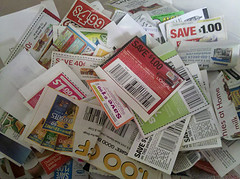
So many coupons! Photo: Flickr user sdc2027.
Google has purchased daily deal aggregator Dealmap. There are now more than 400 providers of daily deals, a sector that may grow to $6.1 billion by 2015. (New York Times)

Your takeaway: Keep an eye on these daily deal sites, but be wary. The bottom line is that you’re almost always going to have to discount your product by at least 50%, and consumers are loyal to the deal site brands (like Groupon or LivingSocial), not your brand. Do your homework before you commit. More information here.


The Washington Post reports that everyone is rebranding, from Honest Tea to non-profits, to the DC Water and Sewer Authority. (WaPo)

Your takeaway: In my experience, changing a visual brand (your logo, color scheme, tagline) is almost never worth the expense and headache, especially if you’re a brick and mortar business (just imagine purchasing new signage for hundreds of stores). But it CAN be worth it if there’s good reason to change. If you need to disassociate your brand story from a PR nightmare, or your visual identity is simply outdated, give some serious thought to what it would take, and what it would cost to rebrand yourself. Just read this story about the Gap’s experience before you jump in.


The most important story this week:

Remember how Obama lowered FICA by 2% as part of his economic stimulus? FICA is shorthand for the social security tax the government takes out of employee paychecks each pay period. In 2011, people collecting a paycheck received a 2% reduction in their FICA withholding, so paychecks got a bit bigger, whether folks received raises or not.

Unfortunately, as part of the recent debt ceiling debacle, this tax cut won’t be held over for 2012. This means that in 2012, the government will begin taking that 2% out again. The result? Workers collecting a paycheck will have more tax withheld starting January 1. People who don’t get a raise will have smaller paychecks, to the tune of $10 billion a month, or about $1,500 per working family for year. (Business Insider)

Your takeaway: That’s $1500 these families can’t spend on your product. What’s your plan to deal with this? You’d better start thinking now - about how to market more meaningfully (and less expensively), and how to stay relevant. Is your product a "want" item? Make it a need. Even if you’re a B-to-B outfit, if your customers sell to consumers, you’re still going to be affected.


What's on your mind this week? Please tell me in the comments.


Have a great weekend, and thanks for reading!

Creating Your Brand Story

We've discussed different aspects of story marketing on this blog before, here and here.

Today, it's time to think about your brand story.

Your brand story is how you explain why you do what you do. It gives a bit of history, and invites people in to support what you're doing and who you are.

For example, there's a pretty popular brand of all-natural frozen lunches that says something like this:

When our children were born in 1982, we were very busy, but we still wanted to be able to eat healthy, quality food that was quick and easy to make. We couldn't find any at the store, so we created it ourselves. We liked it so much, we wanted to share it with you.
So, what does this story do?
Welcome to the trainphoto © 2007 Keith Tyler | more info (via: Wylio)

  • It explains how long the company has been in business.
  • It provides a way of identifying with the company - many people are busy, and many people are busy parents.
  • It explains the problem that this product solves - being too busy to make healthy meals - we can all identify with that!
  • It welcomes you in to the brand, and offers you a seat at the table to share.
When you're writing your own brand story, think about:

  • When did your brand come about and what was your situation?
  • What problem were you having that your brand solves?
  • How can your current customer identify with that?
  • What can you say that invites them to join in the story?
Not sure where to begin? I can help.

Related Posts:
What is story marketing and how does it work?
Writing your own customer stories